










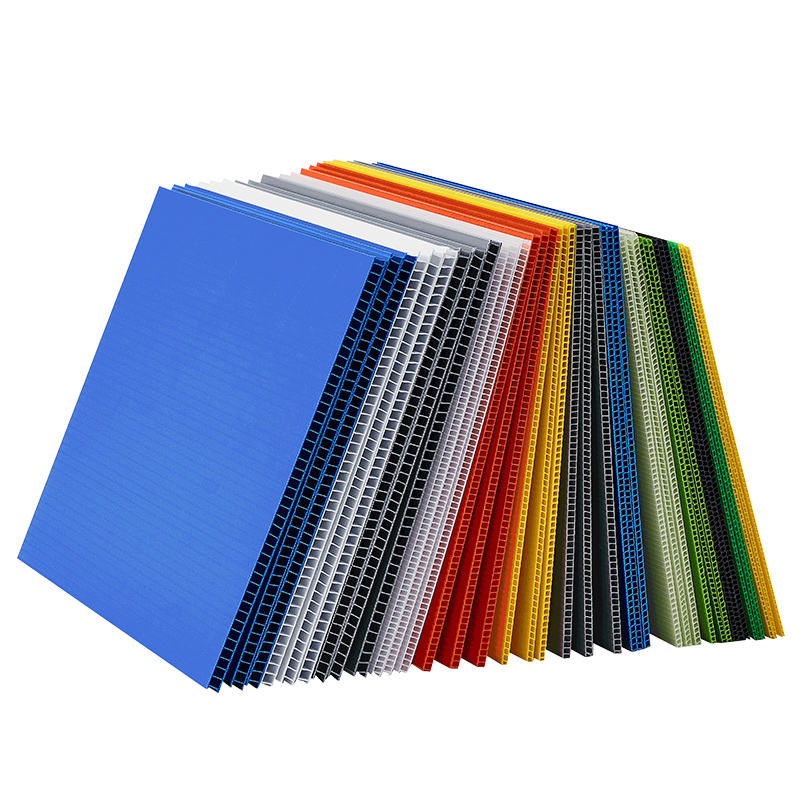
Why Corrugated Plastic Sheets Are a Sustainable and Eco-Friendly Material
2026-04-21Sustainability is a key criterion in material selection for industry and commerce today. Among various packaging and construction materials, corrugated plastic sheets (also known as polypropylene corrugated sheets or twin-wall plastic sheets) are gaining increasing importance as an environmentally friendly and sustainable alternative. Thanks to their unique structure, excellent performance, and long service life, corrugated plastic sheets are widely used to replace traditional materials such as cardboard, wood, and single-use plastics.
1. Recyclability and Reusability
Corrugated plastic sheets are typically made from polypropylene (PP) or high-density polyethylene (HDPE), both of which are recyclable thermoplastics. After use, they can be recycled into new plastic products, helping to reduce waste and support a circular economy.
In addition, corrugated plastic sheets offer excellent reusability. Unlike cardboard, which loses strength when exposed to moisture or repeated handling, corrugated plastic retains its durability and structural integrity over time. This significantly reduces replacement frequency and overall material consumption.

2. Long Lifespan and Waste Reduction
One of the key environmental advantages of corrugated plastic sheets is their durability. They are resistant to water, chemicals, impact, and corrosion, making them suitable for demanding applications such as logistics, agriculture, construction, and advertising.
Because they have a much longer lifespan than conventional materials, they require fewer replacements. This helps reduce waste generation and lowers the overall environmental impact of packaging and storage systems.
3. Lightweight Design for Energy Savings
Thanks to their hollow structure, corrugated plastic sheets are extremely lightweight. This makes them easy to handle and install while also reducing transportation costs and fuel consumption.
Lower weight leads to reduced CO₂ emissions during logistics and shipping, making corrugated plastic sheets a more energy-efficient alternative to heavier materials such as wood or solid plastic panels.
4. Non-Toxic and Environmentally Safe
High-quality corrugated plastic sheets are non-toxic and do not release harmful substances during normal use. They are safe for applications such as food packaging, agriculture, and indoor environments.
Unlike some treated wood products or coated materials, corrugated plastic sheets do not require chemical treatments that may be harmful to the environment. This makes them a cleaner and safer choice across many industries.
5. Reduction of Single-Use Materials
Corrugated plastic sheets are increasingly replacing single-use packaging materials such as cardboard boxes and disposable trays. Because they are washable, foldable, and reusable, they significantly reduce the amount of single-use waste generated by businesses.
This is especially important in logistics and warehousing, where packaging waste is often produced in large volumes.
6. Supporting Sustainable Business Practices
By adopting corrugated plastic sheets, companies can improve their environmental performance and align with global sustainability goals. Their recyclability, reusability, and long service life help reduce carbon emissions and minimize landfill waste.
In many industries, the choice of corrugated plastic sheets is driven not only by their performance advantages but also by a growing commitment to environmental responsibility and sustainable development.
 عربي
عربي Deutsch
 Français
 Italia
 Portugal
 España