










Does a Thicker PP Corrugated Plastic Sheet Always Mean Better Performance?
2026-09-03When choosing a PP corrugated plastic sheet, thickness is one of the first specifications buyers consider. It is easy to assume that a thicker sheet will always provide better performance. However, thickness alone does not determine the overall quality, strength, or suitability of a PP corrugated plastic sheet. The right choice depends on the specific application and several other factors.
A thicker PP corrugated plastic sheet generally provides greater rigidity and can offer better resistance to bending, impact, and pressure. For applications that require additional structural support, such as heavy-duty packaging, pallet layer pads, industrial dividers, and construction protection, a thicker sheet may be a better choice. However, using the thickest available sheet is not necessarily the most economical or practical solution.
The weight, or GSM (grams per square meter), is another important factor. Two PP corrugated plastic sheets with the same thickness can have different weights and performance characteristics depending on their structure and material density. A higher GSM can provide increased durability and rigidity, while a lower GSM may be sufficient for lightweight applications where flexibility and cost efficiency are more important.
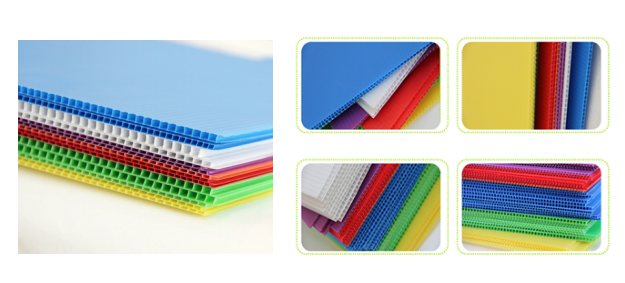
The internal flute structure also affects performance. The design and spacing of the internal ribs influence the sheet's stiffness, impact resistance, and load-bearing capability. Therefore, buyers should evaluate the complete specification rather than choosing a product based only on thickness.
Application requirements should always be considered first. For example, a lightweight sheet may be suitable for temporary signs or simple packaging dividers, while thicker and heavier PP corrugated plastic sheets may be more appropriate for reusable packaging, floor protection, or industrial applications. Environmental conditions such as moisture, UV exposure, temperature, and chemical contact may also affect the required specification.
Cost and handling should also be taken into account. Thicker sheets usually require more raw material, which can increase product weight, transportation costs, and overall purchase price. In some applications, choosing an unnecessarily thick sheet may increase costs without providing meaningful additional benefits.
Therefore, a thicker PP corrugated plastic sheet does not always mean better performance. The ideal sheet should provide the right balance of thickness, GSM, rigidity, durability, weight, cost, and application requirements. By selecting the appropriate specification instead of simply choosing the thickest option, buyers can achieve reliable performance while keeping packaging and transportation costs under control.
 عربي
عربي Deutsch
 Français
 Italia
 Portugal
 España